Instagram Algorithm Explained: How Ranking Really Works in 2026
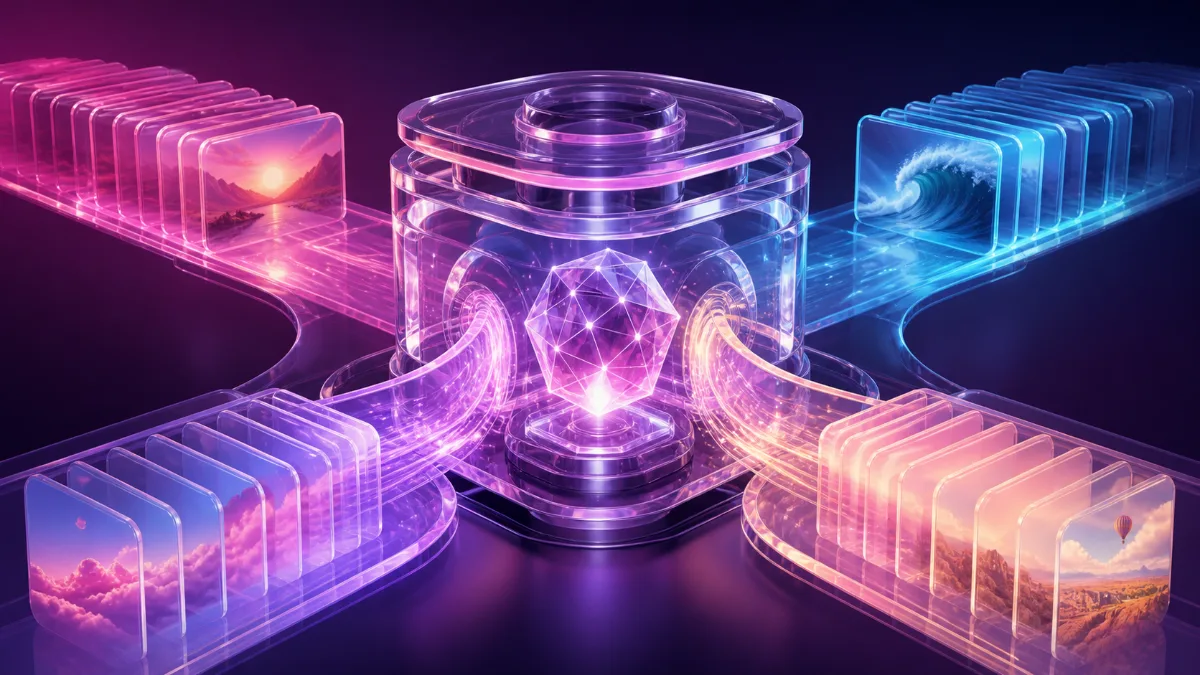
There is no single 'Instagram algorithm' in 2026 - there are four, one for each surface, with shared ranking signals but very different weights. Most creator advice still treats them as one model, which is why it fails. This is the actual breakdown: how Feed, Reels, Stories and Explore rank content right now, the five signals every surface watches, and the moves that work with each one instead of against it.
There is no one algorithm: the four surfaces
Instagram explicitly operates four parallel ranking models: Feed (chronological backbone with relevance boosts), Reels (discovery-first short video), Stories (recency-driven follower loop), and Explore (interest-graph discovery that mostly ignores who you follow). Each surface optimizes for a different user behavior, so each weights the same input signals differently. A Reel that crushes on Explore can flop in Feed; a carousel that wins in Feed will never surface in Explore. Pick the surface before you pick the format.
The five signals that drive every surface in 2026
All four ranking models share the same five inputs. The weights differ - what matters is which signal each surface multiplies hardest.
- Predicted watch time - how long the model expects this viewer to stay on this content (Reels and Explore weight this highest)
- Predicted like or save - probability of the strongest engagement actions, not vanity likes (Feed weights saves 3-4x a like)
- Sender-receiver affinity - how strong the tie is between the poster and the viewer based on DMs, replies, profile visits and prior interactions (Feed and Stories weight this hardest)
- Content freshness - half-life is roughly 18 hours on Feed, 48 hours on Explore, 24 hours on Reels, 24 hours on Stories
- Creator consistency - accounts that post 3-5 times per week in the same surface and same format get a small persistent multiplier on every post
How Reels ranking actually works
Reels is the most aggressive of the four surfaces because it's where Instagram still competes head-on with TikTok. Distribution happens in batches and almost everything is decided in the first hour.
- 1.7-second velocity gate - 60% of initial viewers must stay past the opening frame or the Reel drops to follower-only distribution
- Three discovery batches over 24 hours - each batch is sized by the completion rate and engagement velocity from the prior batch
- Completion rate outweighs likes - a Reel with 40% completion and few likes beats one with 15% completion and many likes
- Audio-trend boost - using a sound that's gaining velocity adds a small multiplier for the first 24 hours of the sound's rise
- Niche-cluster matching - Explore-style content embeddings decide which interest cluster the Reel is seeded into first, then expansion happens cluster by cluster
How Feed ranking actually works
Feed is the only surface where being followed by someone actually matters most. The model picks roughly 30 candidate posts per session and ranks them on predicted save, share and dwell time - in that order. Likes still count but are heavily down-weighted because they're cheap and inflated. Sender-receiver affinity (close-friend ties via DMs and Story replies) is the biggest multiplier; a post from someone you message weekly will outrank a viral post from a stranger every time. Carousels still get a small structural boost because dwell time per impression is higher than single images.
How Explore ranking actually works
Explore is the only surface that almost entirely ignores your social graph. It runs on the interest graph: content embeddings (a vector representation of what each post is about) matched against your historical engagement embeddings. That's why Explore can serve you posts from accounts you've never seen - the model doesn't care who posted, only what the content is about and how similar viewers behaved. Decay here is ~48 hours, longer than every other surface. Niche consistency is what wins on Explore: every off-niche post resets your account's embedding drift and slows future seeding.
How Stories ranking actually works
Stories has no discovery layer at all - it only shows to people who already follow you. Ranking inside the tray is mostly recency plus interaction signals: who you DM, whose Stories you reply to, whose profile you visit, whose sticker taps you trigger. Sticker engagement (polls, questions, sliders) is the cheapest way to lift your tray position because it sends a direct interaction signal to the affinity model. Story view count is essentially noise; reply count and sticker-tap rate are the actual scoreable metrics.
What demotes a post in 2026
- Visible watermarks from other platforms (TikTok logo, CapCut intro) - fingerprinted on upload and demoted on Reels and Explore
- Repost fingerprint match - Instagram now hashes video and audio; reposts of content already on the platform get a 30-60% reach cut
- Hashtag stuffing above ~8 hashtags - diminishing returns turn negative past that point
- Link stickers placed in the caption instead of the bio or Story - Feed posts with external link spam get suppressed in Explore
- Engagement mismatch - large follower count with very low like-to-follower ratio flags the integrity model regardless of source
How to work WITH the algorithm (not against it)
- Stay in one niche - every off-niche post resets the embedding drift on Explore and weakens the niche-cluster match on Reels
- Post when your specific audience is in scroll mode, not when generic 'best time' charts say to (your own Insights override every external chart)
- Engineer the first 30 minutes - the early-engagement velocity signal is what decides whether a post graduates to broader distribution
- Pair organic posting with small real-account engagement seeds (200-400 likes, drip-fed) to clear the velocity gate cleanly without tripping integrity heuristics
Frequently asked questions
Did the Instagram algorithm change in 2026?
Yes - the biggest shift in 2026 is that Instagram fully separated ranking weights per surface and stopped weighting raw view count as a Reels ranking signal. Completion rate, sender-receiver affinity and content embeddings are now the dominant inputs. The four-surface model itself is not new, but the weight asymmetry between them is the largest it's ever been.
Does Instagram show your posts to a percentage of followers first?
Not as a fixed percentage - that's a creator-myth simplification. What actually happens on Feed is that your post enters the ~30-candidate ranking pool for each follower's session, and whether it surfaces depends on that follower's affinity score with you and the post's predicted save/share probability. On Reels it skips followers entirely and goes through the velocity gate first.
Why did my reach suddenly drop?
Three common causes in 2026: niche drift (you posted off-topic content and your embedding cluster shifted), watermark detection (you reposted content with a visible TikTok or CapCut logo), or affinity decay (your active-follower pool shrank because your posting cadence dropped below 3 posts per week). Check your last 10 posts for niche consistency before assuming it's a shadowban.
Do likes still matter for ranking?
They matter, but less than they used to and far less than saves, shares and completion rate. On Feed a save is worth roughly 3-4 likes in the ranking model. On Reels likes barely move the needle compared to completion rate. Likes still matter as a velocity signal in the first 30 minutes because they're the cheapest action - they're a proxy for early-engagement momentum, not a primary ranking input.
Does buying engagement break the algorithm?
Only if it trips one of three integrity patterns: bot accounts with no posting history, impossible delivery velocity (10,000 in two minutes), or engagement mismatch ratios that look statistically impossible. Real-account engagement delivered at human cadence sends the same signal as organic engagement because the integrity model doesn't have a way to distinguish them. The mistake creators make is buying volume instead of buying velocity in the right window.
Bottom line
Stop thinking about 'the Instagram algorithm' as one thing. Decide which surface you're trying to win - Reels for discovery, Feed for community, Stories for retention, Explore for niche expansion - then match your content and your engagement-engineering tactics to the signals that surface actually weights. If you want to layer paid engagement on top, point /likes at the first 30-minute velocity window, point /views at launch Reels to break the social-proof cliff, and use /influencer-package when you need follower growth and likes momentum to compound together.
- Discover
- Analyze
- Learn
- Grow
- Automate
- DiscoverInstagram Downloader
Save any post or Reel in HD — no watermark.
Continue - GrowInfluencer Package (Followers + Likes)Continue
- LearnInstagram Reels Hooks That Actually Work in 2026 (12 Tested Patterns)
We A/B-tested 600+ Reels openers across 18 niches. Here are the 12 hook patterns that consistently triple watch-time - and the three that quietly kill your reach.
Continue
Read next
Instagram Reels Hooks That Actually Work in 2026 (12 Tested Patterns)
We A/B-tested 600+ Reels openers across 18 niches. Here are the 12 hook patterns that consistently triple watch-time - and the three that quietly kill your reach.
Real Likes vs Engagement Pods in 2026: Which Actually Helps Your Reach?
Engagement pods feel free but quietly tank your reach in 2026. Here's what changed in Instagram's signal model - and why real-account likes outperform pods 4:1.
Buy Instagram Views: Does It Boost Your Reels in 2026?
Honest 2026 breakdown of buying Instagram Reels views - what they actually move, when they backfire, and how to pair them with likes for real algorithmic lift.
How to Grow on Instagram in 2026 (Organic + Paid Combo)
The exact playbook our agency uses to grow new Instagram accounts from 0 to 50K in 90 days - combining organic content with strategic paid boosts.